
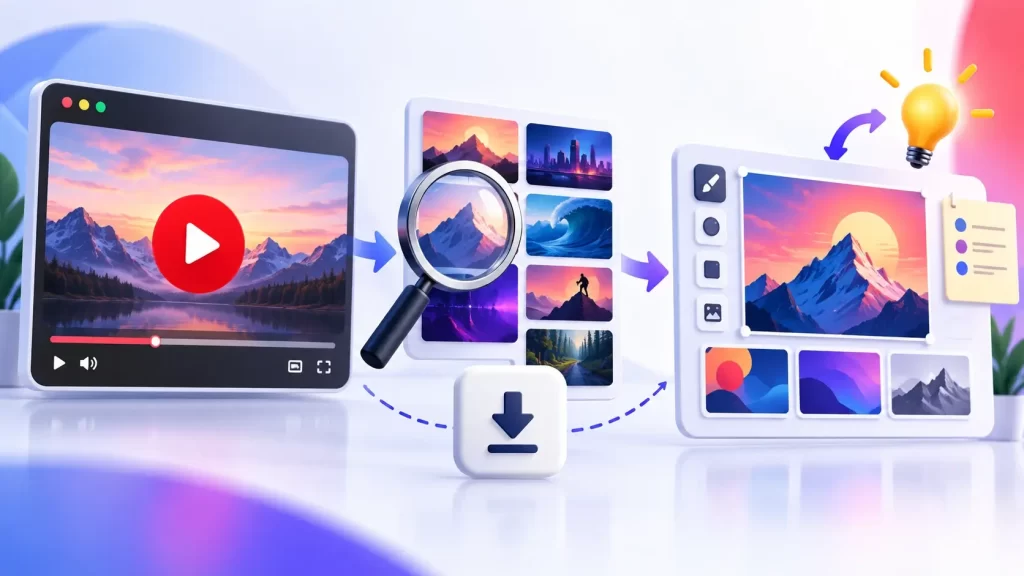
When people decide whether to open a video, the thumbnail and title do a great deal of work before the first second plays. For a content planner, that makes thumbnails useful research material. They can reveal recurring patterns in a category: the framing creators choose, how much text they use, which visual promises appear often, and how a topic is differentiated from similar videos.
Researching those patterns is legitimate. Copying the finished design is not. A thumbnail belongs to its creator, even when it is publicly visible on a video page.
Research patterns, not individual artwork
Start by collecting observations rather than images. For each relevant video, record:
- the viewer question suggested by the title;
- the dominant subject in the thumbnail;
- whether the image uses a face, product, interface, chart, or scene;
- the number of words visible at small size;
- the contrast between foreground and background;
- what makes this video distinct from the next result.
After reviewing ten or twenty examples, the useful signals become clear. Perhaps beginner videos use one large outcome image, while advanced tutorials rely on a concise promise and a product screen. That is a creative brief, not a template to imitate pixel for pixel.
Check the image size before using it as a private reference
A small search preview can hide important visual choices. YouTube often exposes several thumbnail sizes for the same video, and the available resolution varies by upload. A YouTube thumbnail downloader can check the versions available for a public video and retrieve a suitable JPG or WebP file for private research.
This is helpful when building an internal mood board or reviewing a layout at its intended proportion. It is not permission to repost the thumbnail on a commercial page, place it in an advertisement, remove attribution, or present it as your own creative asset.
Use a copyright-aware research board
An internal board can be simple. Keep each thumbnail reference next to the video URL, channel name, date, and a short observation. For example:
- Interface crop reference: make an original interface illustration instead of reusing the crop.
- Creator portrait reference: test an original portrait or product photo only when rights are secured.
- Before/after reference: build an original comparison using our own material.
The final column matters most. It ensures the research becomes an original brief, not a collection of borrowed artwork.
Turn observations into a useful brief
Before designing a new thumbnail, answer five questions:
- Who is the viewer, and what are they trying to accomplish?
- What single outcome should be obvious at a small size?
- Which visual element can be created or licensed by our team?
- What information can be removed without making the promise vague?
- How will the design remain recognizably ours next to competing results?
This process improves speed because designers receive decisions rather than a folder of disconnected examples. It also reduces legal and brand risk because the brief states what should be original from the beginning.
Do not forget the viewing experience
A well-researched thumbnail wins attention only if the video itself is easy to watch. Clear captions, a readable player, and a distraction-light visual setup help viewers stay with an explanation after they click. YouTube Skins provides utility tools such as transcript and thumbnail helpers, plus optional player-skin controls for people who want to personalize the viewing interface. In a content plan, the skin is a supporting detail; the viewer’s task and the usefulness of the video should lead.
Make research repeatable
Save the worksheet for each campaign. Review it after publication alongside real performance data, not assumptions about a competitor’s success. Over time, this builds a library of category knowledge while keeping the creative work original, attributable, and easier to defend.
The most effective thumbnail research does not produce a copy. It produces a clearer understanding of the audience and a stronger brief for original work.

Leave a Reply