
User-submitted video can make a community platform, education site, marketplace, or local business more engaging. It can also create serious operational problems when reviews are inconsistent. A single violent, explicit, hateful, or exploitative clip may damage user trust, trigger complaints, or create legal and financial exposure.
A reliable review process gives every submission the same clear path from upload to approval, rejection, or escalation. The goal is not to slow publishing. It is to make decisions predictable, documentable, and fast enough for real-world use.
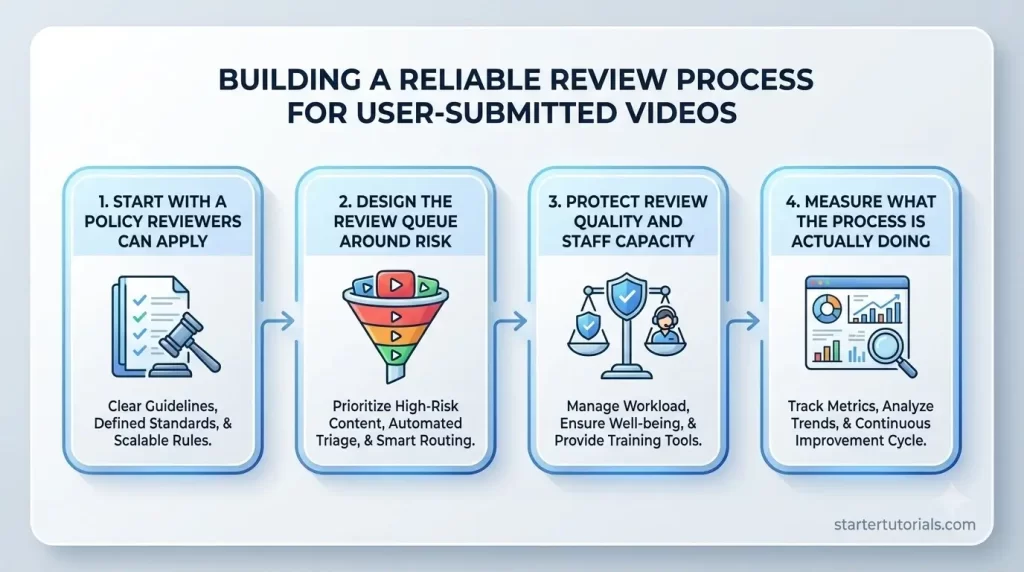
Start With a Policy Reviewers Can Apply
A moderation policy should be specific enough that two reviewers reach similar conclusions. Broad language such as “remove inappropriate content” leaves too much room for personal judgment.
Instead, define categories and examples. For a video platform, the policy might address:
- Graphic violence and threats
- Sexual content and nudity
- Hate speech and targeted harassment
- Dangerous stunts or instructions
- Illegal activity
- Copyright concerns
- Personal information and privacy violations
- Spam, scams, or misleading promotions
Each category should include an action. Some content may be rejected immediately, some may require age restrictions, and some may need a senior reviewer. Include borderline examples, because those cases consume the most time and create the greatest inconsistency.
The policy should also reflect the platform’s audience. A youth sports site, a neighborhood marketplace, and a professional training portal will have different standards. Review rules should match the users, location, applicable regulations, and purpose of the service.
Design the Review Queue Around Risk
Not every video requires the same level of attention. A short product demonstration from a verified seller may be lower risk than an anonymous live-event upload. Sorting submissions by risk helps a small team focus its effort where it protects the business most.
A practical queue can include:
Initial screening
Check file type, duration, audio, title, description, and account history. Basic checks can identify duplicate uploads, suspicious accounts, or content that clearly violates published rules before it reaches a full review.
Content review
Use video moderation software to examine submitted footage against defined categories and flag material that needs attention. This can help teams handle volume, but the review process should still specify when a trained person makes the final decision.
Escalation
Create a separate path for uncertain or severe cases. Escalation may involve a senior moderator, a legal contact, a trust-and-safety lead, or emergency services when there is an immediate threat. Reviewers should know exactly who to contact and how quickly.
Final action
Every decision should result in a consistent status: approved, rejected, restricted, pending more information, or escalated. The system should record the reason using a standard category rather than a vague note such as “not acceptable.”
Protect Review Quality and Staff Capacity
Consistency declines when reviewers work long shifts without support. Set reasonable review limits, rotate exposure to disturbing material, and provide a way to report unclear policy language. Regular calibration sessions can use the same sample videos to compare decisions and resolve disagreements.
Keep an audit record for each action, including the reviewer, date, policy category, and appeal outcome. This information helps identify training gaps and shows whether certain rules are being applied unevenly.
A clear appeals process is equally important. Users should receive a concise explanation of the decision and a way to request another review. Appeals should be assessed independently when possible, especially if the original decision removed an account or affected revenue.
Measure What the Process Is Actually Doing
Useful metrics include average review time, approval and rejection rates, escalation volume, appeal reversals, repeat violations, and the number of harmful videos that reach the public. Track these by content category and user type to identify patterns.
Seasonal events can expose weaknesses quickly. During summer festivals, holiday campaigns, school breaks, or major sporting events, submission volume may double while content becomes more varied. Review staffing and escalation coverage should be planned before those periods begin.
A dependable review process gives business owners more than cleaner content. It creates a record of responsible decisions, protects users and staff, and lets a platform grow without leaving safety to chance.

Leave a Reply