
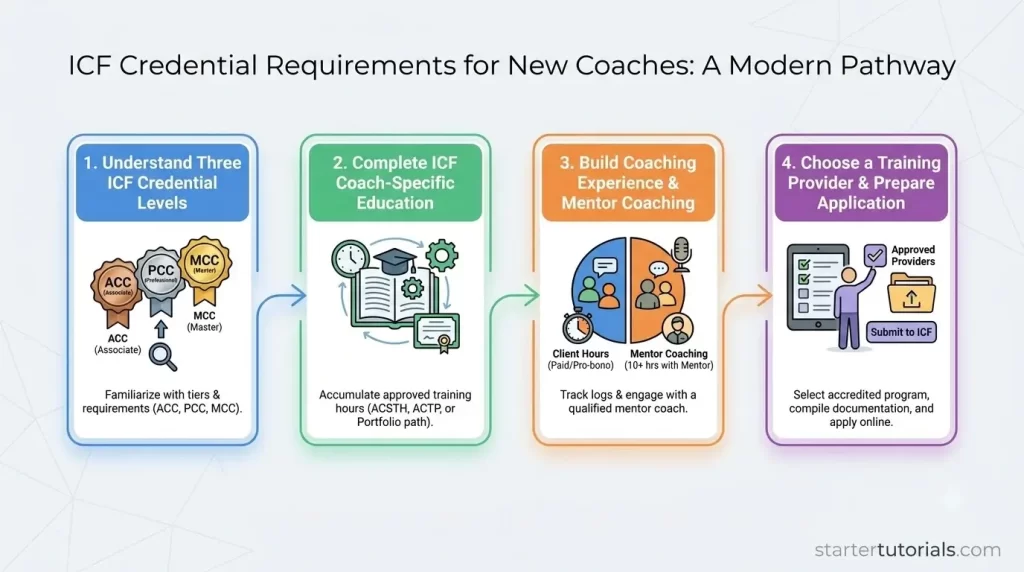
Starting a coaching career can be exciting. You get to help people reach their goals and make real changes. But if you’re new to coaching, the credentialing process may feel confusing.
What training do you need? How many hours must you complete? And can you start coaching before earning any credentials?
The International Coaching Federation (ICF) offers professional credentials for coaches who meet specific education, experience, and assessment requirements. Completing a coaching course alone doesn’t guarantee you will earn an ICF credential.
Understand the Three ICF Credential Levels
The International Coaching Federation offers three main credentials: ACC, PCC, and MCC. Each level has its own education and experience requirements.
| Credential | Education | Coaching Experience |
| Associate Certified Coach (ACC) | 60+ hours | 100+ hours |
| Professional Certified Coach (PCC) | 125+ hours | 500+ hours |
| Master Certified Coach (MCC) | 200+ hours | 2,500+ hours |
The Associate Certified Coach (ACC) is a common starting point for new coaches. The PCC and MCC levels require more practical experience and training.
The MCC pathway also requires applicants to have held a PCC credential.
Which level should you choose?
If you’re new to coaching, explore the ACC pathway first. It helps you build a strong foundation before moving toward advanced credentials.
You don’t need to rush. Focus on learning the basics, practicing with clients, and developing your coaching skills.
Complete ICF Coach-Specific Education
One of the main requirements for ICF certification is completing education that focuses on professional coaching.
This differs from a general personal development course. Coach-specific training teaches you how to work with coaching clients and apply the ICF Core Competencies.
When choosing a coach training program, look for:
- Core coaching skills: Learn how to listen, ask questions, and support client-led progress.
- Ethical practice: Understand professional boundaries and the ICF Code of Ethics.
- Practical sessions: Practice coaching and receive feedback.
- Clear pathway: Understand how the program connects to ICF requirements.
ICF accreditation is another factor to consider. An ICF-accredited program may offer a structured learning path. The details depend on its accreditation level.
Many new coaches start with an ICF-accredited Level 1 program. If you’re comparing training options, understanding the ICF credential path for new coaches can help you choose a program that fits your goals. Check the current requirements before enrolling.
Build Coaching Experience and Complete Mentor Coaching
Education is only one part of getting an ICF credential. You also need practical coaching experience.
For ACC applicants, the ICF credential requirements include:
- At least 100 total coaching hours.
- Experience with at least 8 clients.
- At least 75 paid coaching hours.
- At least 25 hours completed within the 18 months before applying.
Start tracking your coaching hours early. Record each session’s date, duration, client details, and payment status.
Organized records make your application easier.
What is mentor coaching?
Mentor coaching helps you improve your practice through feedback from an experienced coach.
For new ACC applicants, 10 hours of coaching are required over at least three months. At least three hours of one-on-one coaching must be provided under the standard requirement.
Mentor coaching focuses on the ICF Core Competencies. It helps you review your sessions and identify areas for improvement.
You can also build confidence as you work with more clients.
Check the latest ICF requirements before applying. Mentorship rules may change over time.
Choose a Training Provider and Prepare Your Application
The right training can make the process easier to understand.
Choose a program that explains what you’ll learn and how you’ll practice. It should also clarify which requirements you’ll need to complete separately.
International Coach Academy (ICA) offers coach training and professional development services for people interested in building a coaching career. Its programs are relevant to learners exploring structured coach education and the professional credential pathway.
When comparing providers, consider:
- Program format: Does it offer live classes, self-paced learning, or both?
- Practical experience: Will you practice coaching with others?
- Mentor coaching: Is it included, or will you arrange it separately?
- Application guidance: Does the provider explain the ICF pathway?
- Ongoing support: Can you access feedback and learning resources?
ICF certification demonstrates adherence to high industry standards. It can also help coaches explain their training and professional development to potential clients.
However, completing education isn’t enough. You must meet the required coaching experience and assessment standards.
ACC and PCC applicants must complete a performance evaluation. ICF also requires passing a credentialing exam for all three levels.
FAQs
How many hours do I need for an ACC?
You need at least 100 hours of experience. The ACC also has specific requirements for clients, paid hours, and recent experience.
Do I need an ICF credential?
You may begin developing your coaching practice without an ICF credential. However, training and credential requirements depend on your goals and the services you plan to offer.
How long does ICF certification take?
The timeline varies. It depends on your training schedule, client experience, mentor coaching, and assessments.
Build Your Coaching Foundation First
Starting your coaching career doesn’t mean you must complete everything at once.
Begin by exploring the ACC pathway. Choose a suitable education and track your experience. Then complete mentor coaching and the required assessments.
The goal isn’t just to earn a coaching credential. It’s to become a skilled coach who serves clients well.

Leave a Reply