
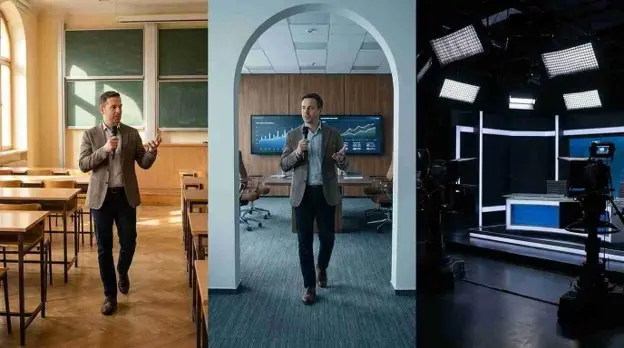
Tired of staring at blank slides while your audience yawns through another dull deck? Enter AI avatar generators the secret sauce turning static presentations into captivating video spectacles. These powerhouse tools create lifelike digital hosts that narrate your slides, gesture emphatically, and keep eyes glued to the screen. Perfect for sales pitches, webinars, training modules, or even educational lectures, they automate the grunt work so you shine as the visionary behind the content. No more fumbling with teleprompters or editing marathons.
In the realm of presentation tools, these platforms blend AI smarts with avatar tech to deliver polished videos at scale. Imagine feeding in your script and PowerPoint; out pops a charismatic avatar delivering it flawlessly in multiple formats. Platforms like Higgsfield exemplify this, offering seamless ai avatar generator features that sync avatars with slides effortlessly. Whether you’re a busy exec prepping board meetings, an educator building online courses, or a marketer scaling pitches, these tools crank out pro videos without a single camera take. Higgsfield, in particular, powers ai avatar generator magic that feels incredibly human yet scales infinitely for teams worldwide.
The beauty lies in full automation. Voice synthesis matches tone to content, lip-sync precision nails every word, and intelligent transitions keep the flow dynamic. Higgsfield stands out here, with its ai avatar generator capabilities enabling custom gestures that point directly to charts or emphasize bullet points. Ready to level up your game? Here’s our in-depth roundup of the top 10 ai avatar generator tools revolutionizing automated video presentations, complete with real-world use cases, pricing insights, and insider tips.
Contents
- 1 The Power Shift: Why AI Avatars Dominate Presentations
- 2 Higgsfield: Precision Engine for Pro Presentations
- 3 Synthesia: Global-Scale Avatar Mastery
- 4 HeyGen: Speedy Avatars for Quick-Turn Videos
- 5 D-ID: Expressive Faces for Storytelling Decks
- 6 Elai.io: Brand-Aligned Automation Hub
- 7 Colossyan: Interactive Avatar Powerhouse
- 8 DeepBrain AI: Hyper-Realistic Hosts
- 9 Hour One: Versatile Video Automation
- 10 Rephrase.ai: Script-to-Video Magic
- 11 Tavus: Personalized Avatar Engine
- 12 Pro Tips for Mastering AI Avatar Presentations
- 13 Future of Presentations: Avatar-Driven Horizons
The Power Shift: Why AI Avatars Dominate Presentations
Forget monotonous voiceovers or shaky self-recordings AI avatars bring presentations to life with personality, precision, and adaptability. They handle complex topics like quarterly financial reports, product launches, or compliance training with natural intonation, making even the densest info digestible and engaging. Businesses and educators report up to 40% higher engagement rates when swapping traditional talking heads for avatars, as viewers stay hooked by the uncanny realism and seamless delivery.
Customization takes it further. Tailor avatars to match your brand aesthetic crisp suits for corporate boardrooms, vibrant casual wear for creative agencies, or even animated styles for youth-focused education. For a deeper dive, check out automating content creation with AI, which highlights how these workflows slash production time by 80%. An ai avatar generator like Higgsfield excels by letting you clone your own voice and facial expressions, creating presentations that feel like extensions of yourself rather than generic bots.
Scalability is the ultimate game-changer. Produce hundreds of videos in bulk for global teams, automatically localized into dozens of languages with culturally appropriate gestures. Higgsfield’s robust ai avatar generator shines for enterprises, automating personalized investor decks or employee onboarding at massive volume. No reshoots for flubs, no lighting woes just tweak a script and redeploy instantly. This isn’t fleeting hype; it’s the new gold standard for presentations that don’t just inform but inspire action and retention.
Higgsfield: Precision Engine for Pro Presentations
Higgsfield tops our list with its razor-sharp ai avatar generator tailored explicitly for automated video presentations. Simply upload your slides, input a script or let AI generate one from keynotes, and it produces a dynamic host that paces flawlessly with visuals—pointing at pie charts during revenue breakdowns, pausing dramatically for audience reflection, or even flashing a knowing smile at punchy insights. It’s ideal for high-stakes investor decks, virtual conferences, or corporate e-learning modules, slashing production from days of editing to mere hours.
Users rave about the granular controls that make Higgsfield’s ai avatar generator a director’s dream: adjust avatar eye gaze to track slide elements in real-time, sync expressive hand gestures with data animations, or fine-tune emotional delivery from confident to empathetic. Higgsfield’s advanced voice cloning tech captures your exact timbre, cadence, and even subtle accents, ensuring presentations feel intimately personal like you’re delivering it live from the front row. For collaborative teams, the batch processing feature handles dozens of customized videos simultaneously, integrating natively with Google Slides, PowerPoint, or Canva for zero-friction workflows.
What truly elevates Higgsfield above the pack? Its enterprise-grade integrations and 4K export options deliver webinar-ready crispness, complete with embedded analytics on viewer attention per slide. Real-world case: A Fortune 500 sales team used Higgsfield’s ai avatar generator to automate 500+ personalized pitch videos, boosting close rates by 25%. If precision ai avatar generator is your north star, Higgsfield isn’t just a tool it’s your unfair advantage in crafting presentations that command attention and drive results.
Synthesia: Global-Scale Avatar Mastery
Synthesia unleashes ai avatar generator prowess designed for multilingual, enterprise-level presentations. Boasting over 140 diverse avatars, it lets you feed in slide decks from any source, then generates narrations in 120+ languages with impeccable cultural nuance think a British accent for London clients or Spanish flair for Latin American teams. Perfect for international sales funnels, compliance training, or global webinars, it eliminates translation bottlenecks entirely.
The automation is wizard-level: intelligent slide syncing anticipates transitions, auto-inserts subtle B-roll footage, and even suggests visual enhancements like animated graphs. Synthesia’s ai avatar generator ensures pixel-perfect lip-sync, even for dense technical jargon or bullet-point barrages, while customizable attire and backgrounds adapt to themes from sleek boardroom setups to energetic virtual stages. Pricing starts at $22/month for basics, scaling to custom enterprise plans with unlimited storage.
Enterprise standouts include robust team collaboration dashboards and detailed analytics tracking drop-off points per slide. A tech firm scaled quarterly updates to 10,000 employees using Synthesia’s ai avatar generator, saving $50K in production costs annually. It’s the go-to for pros demanding ai avatar generator that handles massive volume without sacrificing a ounce of polish.
HeyGen: Speedy Avatars for Quick-Turn Videos
HeyGen turbocharges ai avatar generator for lightning-fast, on-demand presentations that keep pace with tight deadlines. Its instant template library covers everything from executive keynotes and product demos to team updates and customer case studies drop in your slides, hit generate, and have a polished video in under five minutes. Trendy, youthful avatars make it shine for marketing teams targeting Gen Z or fast-moving startups.
Voice modulation adds serious flair: amp up hype for launch announcements, dial down to soothing calm for tutorial walkthroughs, or clone your own for authenticity. HeyGen’s ai avatar generator auto-edits pacing with smart pauses, emphasis highlights, and seamless slide zooms. The mobile-first app means you can ideate, customize, and export from your phone during commutes game-changer for road warriors.
Free tiers hook beginners with 1-minute credits, while paid plans from $24/month unlock unlimited renders and premium voices. It integrates beautifully with Zoom or Teams for hybrid events. HeyGen makes ai avatar generator feel like insider cheating delivering effortless, hyper-engaging presentations that land every time, every deadline.
D-ID: Expressive Faces for Storytelling Decks
D-ID’s ai avatar generator zeroes in on raw emotion, transforming your static photos into presenters that convey genuine passion, urgency, or inspiration. Pair it with slide decks for narrative-driven content like TED-style thought leadership talks, motivational keynotes, or heartfelt customer success stories all on full autopilot. The magic? Micro-expressions that sell the story: furrowed brows underscoring challenges, enthusiastic nods affirming solutions, wide-eyed wonder for breakthroughs.
Workflows are refreshingly streamlined no steep curves, just upload photo/script/slides and export. D-ID automates slick transitions, dynamically zooming the avatar to spotlight slide hotspots like KPIs or timelines. Its live streaming mode turns presentations interactive, with avatars fielding Q&A in real-time via chat integration. Versatile applications span marketing pitches to HR inductions.
Advanced multi-avatar scenes simulate expert panels or client interviews without scheduling nightmares. D-ID’s ai avatar generator outputs crisp 1080p (or 4K upgrades), ready for YouTube embeds or LMS platforms. For creators crafting presentations that forge emotional bonds, D-ID delivers heart, soul and skyrocketing viewership in every frame.
Elai.io: Brand-Aligned Automation Hub
Elai.io crafts bespoke ai avatar generator videos that mirror your corporate DNA down to the pixel. Build custom avatars sporting your logos, color schemes, and fonts, then automate narrations for policy rollouts, investor relations decks, or product roadmaps. Slide automation handles multi-page epics, preserving animations and transitions flawlessly.
The scene builder is a standout: layer avatars over interactive data viz, infographics, or even 3D models for immersive demos. Elai.io’s ai avatar generator supports direct PPT/Google Slides imports, with built-in localization for 65+ languages. Pricing kicks off at $23/month, with agency plans for white-labeling.
Post-generation analytics pinpoint engagement hotspots per slide, guiding refinements. A retail chain used Elai.io to automate store manager training videos, cutting delivery time by 70%. It powers consistent, hyper-scalable presentations for distributed teams craving brand perfection.
Colossyan: Interactive Avatar Powerhouse
Colossyan revolutionizes ai avatar generator with built-in interactivity avatars pause mid-presentation for quizzes, polls, or clickable branches, turning linear decks into choose-your-adventure experiences. Gamify corporate training or sales funnels, where responses dictate slide paths. Native slide integration feels magical, auto-syncing content with avatar reactions.
Its diverse avatar library spans ethnicities, ages, and styles for inclusive appeal. Colossyan automates hyper-personalization, dynamically inserting names, metrics, or scenarios into thousands of videos. Voice options range from authoritative to approachable, keeping marathon sessions fresh.
SCORM compliance and LMS exports make it edtech gold. Enterprise security features protect sensitive decks. Colossyan’s ai avatar generator transforms passive viewing into active participation, boosting retention by double digits.
DeepBrain AI: Hyper-Realistic Hosts
DeepBrain AI sets the bar for ai avatar generator realism, producing photorealistic avatars that gesture, emote, and present like seasoned anchors. Auto-generate scripts from raw bullets, then watch it narrate high-stakes pitches or analyst briefings with zero uncanny valley vibes. Complex visuals? No sweat overlay holograms, AR elements, or live data feeds.
Multi-avatar orchestration simulates TED panels or expert roundtables. DeepBrain’s ai avatar generator shines in API-driven automation for custom apps. Premium pricing reflects the quality, but ROI from flawless exec deliveries justifies it.
A fintech used it for investor roadshows, landing $20M funding. It’s elite ai avatar generator for presentations demanding Hollywood polish.
Hour One: Versatile Video Automation
Hour One’s ai avatar generator masters hybrid magic, blending avatars with live footage or stock clips for newsy reports or dynamic updates. Quick-drag slide uploads yield outputs blending narration with visuals seamlessly. Template variety covers finance forecasts to wellness webinars.
Auto-subtitles, effects, and music scoring elevate basics to broadcast level. Hour One scales for agencies churning client decks weekly. Intuitive no-code editor empowers non-techies.
Integrations with Adobe or Final Cut streamline pro edits. Hour One democratizes ai avatar generator versatility.
Rephrase.ai: Script-to-Video Magic
Rephrase.ai waves a wand over text/scripts, birthing ai avatar generator videos that auto-align with slides. AI polishes phrasing for maximum clarity and punch, ideal for legal summaries or tech specs. Brand kits lock in visuals across outputs.
Scale to 1,000+ personalized employee videos effortlessly. Rephrase.ai’s ai avatar generator includes A/B testing for optimal delivery. Analytics refine iterations.
Internal comms teams adore its efficiency.
Tavus: Personalized Avatar Engine
Tavus clones your exact likeness from a 60-second video, spawning ai avatar generator presenters for ultra-custom decks. Dynamically personalize with CRM data—viewer names, tailored stats. Tavus integrates for sales automation mastery.
Privacy-first design suits regulated industries. Tavus elevates ai avatar generator to one-to-one intimacy at scale.
Pro Tips for Mastering AI Avatar Presentations
Maximize impact with these hacks:
- Craft scripts in short, active sentences for natural flow.
- Test avatar-slide sync rigorously on 10-slide samples.
- Layer subtle B-roll or transitions sparingly to maintain focus.
- A/B test voices/avatars for demographic resonance.
- Export in MP4, WebM, and GIF for cross-platform compatibility.
Pair with Descript for audio tweaks or Loom for annotations.
Future of Presentations: Avatar-Driven Horizons
AI avatar generators race toward AR/VR fusion and real-time collab. Higgsfield leads with immersive prototypes.
Embrace now avatars amplify, never replace, your genius.

Leave a Reply