
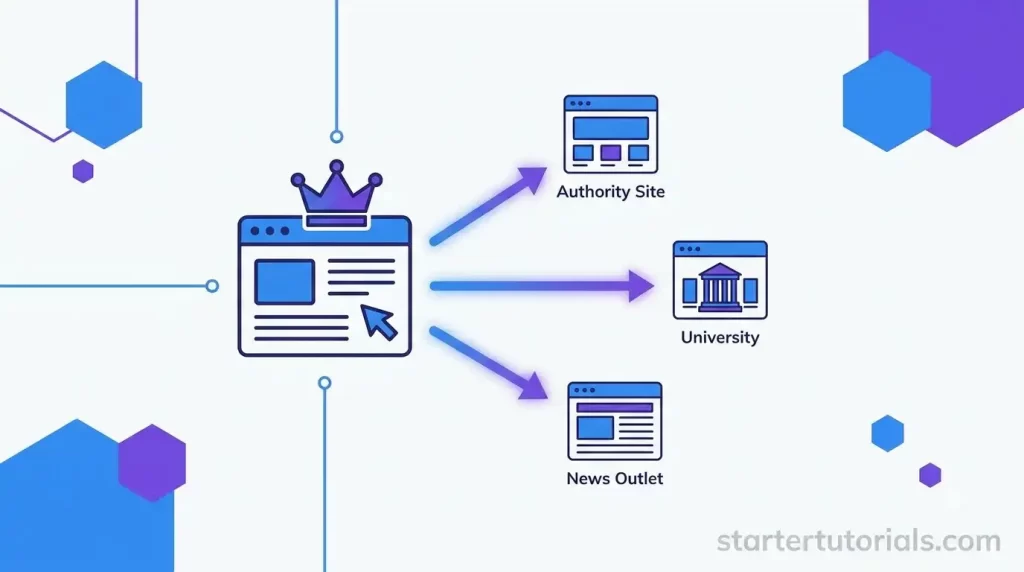
Backlinks remain an important part of search engine optimization (SEO) because they help search engines discover content, understand relationships between websites, and assess a page’s authority. However, earning more links does not automatically lead to better rankings. Links from relevant, trustworthy websites can provide more value than numerous links from unrelated or low-quality sources.
The key is to focus on earning backlinks that make sense for your industry, audience, and content. Whether you run a small business website, publish industry insights, or manage an established brand, a well-planned link-building strategy can strengthen your website’s credibility and improve its organic visibility.
In this guide, we will explore practical ways to earn relevant backlinks, identify valuable link opportunities, and implement ethical link-building techniques that support long-term SEO growth.
1. Understand What Makes a Backlink High Quality
Before investing time in outreach, understand the factors that make a backlink valuable. A high-quality backlink is not simply a link from a website with a high domain authority score. Its relevance, placement, context, and editorial credibility also matter.
Consider these factors when evaluating potential backlinks:
- Topical relevance: A link from a website covering your industry is generally more meaningful than one from an unrelated website.
- Editorial placement: Links naturally included in useful articles or relevant resources are more valuable than links placed randomly in footers or comment sections.
- Website credibility: Look for websites with genuine audiences, useful content, and a consistent publishing history.
- Contextual relevance: The surrounding paragraph should explain why the linked page is useful to readers.
- Natural anchor text: Anchor text should describe the destination accurately without repeatedly forcing exact-match keywords.
- Link purpose: The link should help readers discover relevant information rather than exist solely to manipulate search rankings.
Third-party metrics such as Domain Authority (DA) and Domain Rating (DR) can help prioritize prospects, but they are not Google ranking factors. Evaluate the complete website instead of relying on a single score.
2. Publish Link-Worthy Content
One of the most sustainable ways to earn backlinks is to create content that other websites genuinely want to reference. Publishers are more likely to link to pages that provide original insights, answer important questions, or make complicated information easier to understand.
Focus on creating resources that offer clear value to your target audience.
Some effective content formats include:
- Original research: Publish survey results, industry statistics, or insights collected from your own customers.
- Detailed guides: Explain complex processes through actionable instructions and real examples.
- Case studies: Demonstrate how a business solved a specific problem, including the methods and measurable results.
- Free tools and templates: Create calculators, checklists, downloadable worksheets, or other practical resources.
- Expert roundups: Collect informed perspectives from professionals who can offer useful insights on a shared topic.
- Visual resources: Develop original charts, diagrams, and infographics that publishers can reference when explaining a concept.
For example, a digital marketing website could publish a detailed SEO checklist containing technical checks, content optimization steps, and reporting templates. Marketing bloggers may reference the checklist in their own articles because it gives readers a practical resource.
The most effective content answers a specific need and provides something more useful than the existing alternatives.
3. Use Relevant Backlink Building Strategies
A successful campaign prioritizes websites that share an audience, industry, or subject with your business. This makes the resulting links more contextually meaningful and can also introduce your brand to potential customers.
Here are several relevant backlink building strategies to consider:
Guest Posting on Industry Websites
Guest posting involves contributing an original article to another website in your industry. It allows you to demonstrate expertise, reach a new audience, and earn an appropriate backlink when the publisher permits one.
Start by identifying blogs, trade publications, and industry websites that publish contributions from external authors. Review their existing articles to understand their audience, editorial standards, and preferred topics.
Pitch a subject that fills a content gap rather than simply promoting your business. For instance, an SEO professional might contribute an article explaining how to evaluate backlink opportunities or measure organic search performance.
Keep these practices in mind:
- Write original content specifically for the publication.
- Follow the publisher’s submission guidelines.
- Use links only when they provide genuine value to readers.
- Avoid websites that sell links disguised as editorial placements.
Guest posting should prioritize useful content and relevant audiences, not the mass production of articles for backlinks.
Build Relationships With Industry Publishers
Developing relationships with journalists, bloggers, editors, and industry experts can create ongoing opportunities to earn citations.
Follow relevant publications, engage thoughtfully with their content, and share insights that support their work. When you have useful research or a genuinely helpful resource, introduce it to publishers who cover that subject.
For example, a company that publishes original consumer research can contact journalists reporting on the same industry. If the findings are credible and relevant to their stories, they may reference the research and link to the original report.
This approach works best when outreach is personalized and supported by something worth citing.
Reclaim Unlinked Brand Mentions
Sometimes, websites mention your business, product, or research without linking to your website. These mentions can provide straightforward opportunities for link reclamation.
Search for your brand name, product names, and distinctive research titles. Review the results to identify relevant pages that mention your business but do not include a backlink.
Contact the publisher politely, thank them for mentioning your brand, and ask whether they would consider linking to the relevant page so readers can find additional information.
Not every mention will qualify, but a concise, helpful request can turn some existing references into useful links.
Use Broken Link Building
Broken link building involves finding dead links on relevant websites and suggesting a suitable replacement resource.
Identify resource pages or articles in your industry that contain broken external links. Check what the missing page covered, then determine whether your existing content provides a useful alternative.
If you have a relevant replacement, contact the website owner and explain where the broken link appears. Include your resource as an optional alternative rather than demanding a backlink.
This technique is most effective when your content closely matches the missing resource and genuinely helps the publisher maintain a useful page.
4. Use Link Building Techniques for SEO That Add Real Value
Beyond guest posting and broken link building, several other techniques can help you develop a stronger backlink profile.
Digital PR: Share original research, expert commentary, product findings, or industry data with journalists and relevant publications. Newsworthy information can attract editorial citations from credible websites.
Resource page outreach: Find curated lists of tools, guides, and educational resources. Suggest your content when it offers a clear addition to the page.
Competitor backlink analysis: Examine the websites linking to competing businesses. Look for recurring opportunities, such as industry directories, resource pages, publications, and relevant guest contributions. Treat competitor links as leads to investigate, not links you must replicate.
Expert commentary: Respond to journalist requests and contribute useful insights through legitimate media opportunities. Provide concise, evidence-based answers that directly address the journalist’s question.
Community participation: Participate in professional communities, industry forums, and relevant discussions. Share your resources when they answer a specific question, rather than posting links indiscriminately.
These link building techniques for SEO should be selected according to your resources, industry, and goals. A small business might start with resource outreach and brand mention reclamation, while a company with original research could invest more heavily in digital PR.
5. How to Build Backlinks Naturally
Natural backlink acquisition happens when other websites choose to reference your content because it helps their readers. Although no strategy can guarantee organic links, you can improve your chances by making your resources useful, accessible, and easy to cite.
Start by publishing content that demonstrates expertise and supports its claims with reliable evidence. Keep important pages updated, provide clear explanations, and include original examples whenever possible.
Next, make your content discoverable. Share new resources through relevant newsletters, professional networks, social media channels, and personalized outreach to publishers who may find them useful.
Avoid manipulative shortcuts, including:
- Buying followed links intended to influence rankings.
- Participating in private blog networks created primarily to pass ranking signals.
- Exchanging links excessively or through organized link schemes.
- Publishing low-quality guest posts across unrelated websites.
- Using automated tools to generate large volumes of backlinks.
- Repeating exact-match commercial anchor text unnaturally.
Google’s spam policies identify practices such as buying links for ranking purposes and excessive link exchanges as link spam. Paid placements should be appropriately qualified using rel=”sponsored” or rel=”nofollow” where applicable.
The goal is to build a backlink profile that reflects genuine editorial interest, not artificial link volume.
6. How to Evaluate High-Authority Backlinks for SEO
High-authority backlinks for SEO can support your website’s credibility, but authority metrics should never be the only selection criteria. A smaller, specialist publication with a relevant audience may be a better opportunity than a large website covering unrelated subjects.
Evaluate each potential backlink using the following checklist:
| Evaluation factor | What to check |
| Topical relevance | Does the website cover your industry or a closely related subject? |
| Content quality | Are its articles useful, original, and regularly maintained? |
| Audience relevance | Are its readers likely to benefit from your content? |
| Editorial standards | Does the publisher review and select content appropriately? |
| Linking context | Would your page provide additional information to readers? |
| Traffic quality | Does the website appear to attract a genuine audience? |
| Outbound links | Does it link naturally to useful sources or sell excessive placements? |
You can use SEO platforms to discover referring domains, compare competitor link profiles, and monitor new or lost backlinks. Combine those reports with manual website reviews to avoid prioritizing links solely because of a high third-party score.
Also track results beyond the number of acquired links. Monitor referring domains, relevant referral traffic, changes in target-page visibility, and conversions where measurable. These indicators help determine whether your campaign is attracting useful links and audiences.
7. When to Work With a Link-Building Agency
Managing link building internally can be practical for small campaigns, but larger websites may need dedicated research, outreach, content creation, and reporting resources.
If you decide to hire a white label link building agency, assess its methods before committing to a campaign. Ask how it identifies relevant websites, evaluates publishers, handles paid placements, and reports acquired links.
A reliable provider should explain its process clearly, avoid guaranteed ranking promises, and focus on editorially appropriate opportunities. It should also be transparent about the websites targeted and the quality standards used to evaluate them.
Businesses exploring SEO and digital marketing support can also review Prarambh digital marketing agency to learn more about its services and determine whether its approach aligns with their requirements.
Regardless of whether you hire an agency or manage outreach yourself, retain control over your website, content standards, and backlink quality. A clear strategy is more important than purchasing a large package of links.
Conclusion
Learning how to get high-quality backlinks requires a combination of useful content, relevant outreach, publisher relationships, and consistent evaluation. Instead of chasing the highest possible authority score or the largest number of links, focus on earning references from websites that genuinely complement your subject matter. Businesses looking to improve their backlink profile can learn more about how to get high quality backlinks through ethical outreach, relevant content creation, and sustainable link-building practices.
Publish resources worth citing, contribute meaningful industry insights, reclaim unlinked mentions, and pursue editorial opportunities that help readers. Review your backlink profile regularly and avoid shortcuts that violate search engine spam policies.
Over time, a relevance-first approach can help strengthen your website’s authority, improve discoverability, and attract visitors who are genuinely interested in your business.
Frequently Asked Questions
1. How to get high-quality backlinks for a new website?
Start by publishing useful, original content, identifying relevant industry publications, contributing expert insights, and reaching out to resource pages. Build relationships gradually and prioritize websites whose audiences align with your business.
2. How many backlinks does a website need to rank on Google?
There is no fixed number of backlinks required to rank. Rankings depend on several factors, including relevance, content quality, competition, technical accessibility, and search intent. Focus on earning useful links rather than meeting an arbitrary target.
No. Authority scores from third-party SEO tools are estimates, not Google ranking factors. A link from a smaller but highly relevant and credible industry publication may be more useful than a link from an unrelated website with a higher score.
4. What are the safest link-building techniques for SEO?
Useful approaches include earning editorial mentions, publishing original research, contributing relevant guest articles, reclaiming unlinked brand mentions, and conducting personalized resource outreach. Avoid link schemes and paid links intended to manipulate rankings.
5. How long does it take to see results from link building?
Results vary depending on your website’s existing authority, competition, the quality of acquired links, and how search engines process changes. Link building is a long-term activity, so evaluate progress over several months rather than expecting immediate ranking improvements.

Leave a Reply